Day-ahead energy optimisation
We developed a forecasting and optimisation engine for an energy management platform serving around 50 residential and commercial sites. It creates 24-hour battery schedules using consumption forecasts, solar generation and electricity prices, with real-time control and savings measured against a baseline.
- residential and commercial sites in production
- ~50
- schedule horizon, regenerated every hour
- 24 h
The challenge
An energy management platform coordinates solar panels, battery storage, heat pumps and EV chargers across residential and commercial sites. Each site has its own mix of equipment, its own grid connection limits and its own electricity contract. The platform has to decide, continuously, when a battery should charge, when it should discharge, how much room to leave for an EV session that might start at any moment, and how to do all of that without exceeding the connection the building actually has. These are not decisions that can wait for a person. They happen around the clock, across the entire fleet, and on locations with dynamic day-ahead pricing the difference between a good answer and the best answer shows up directly on the electricity bill.
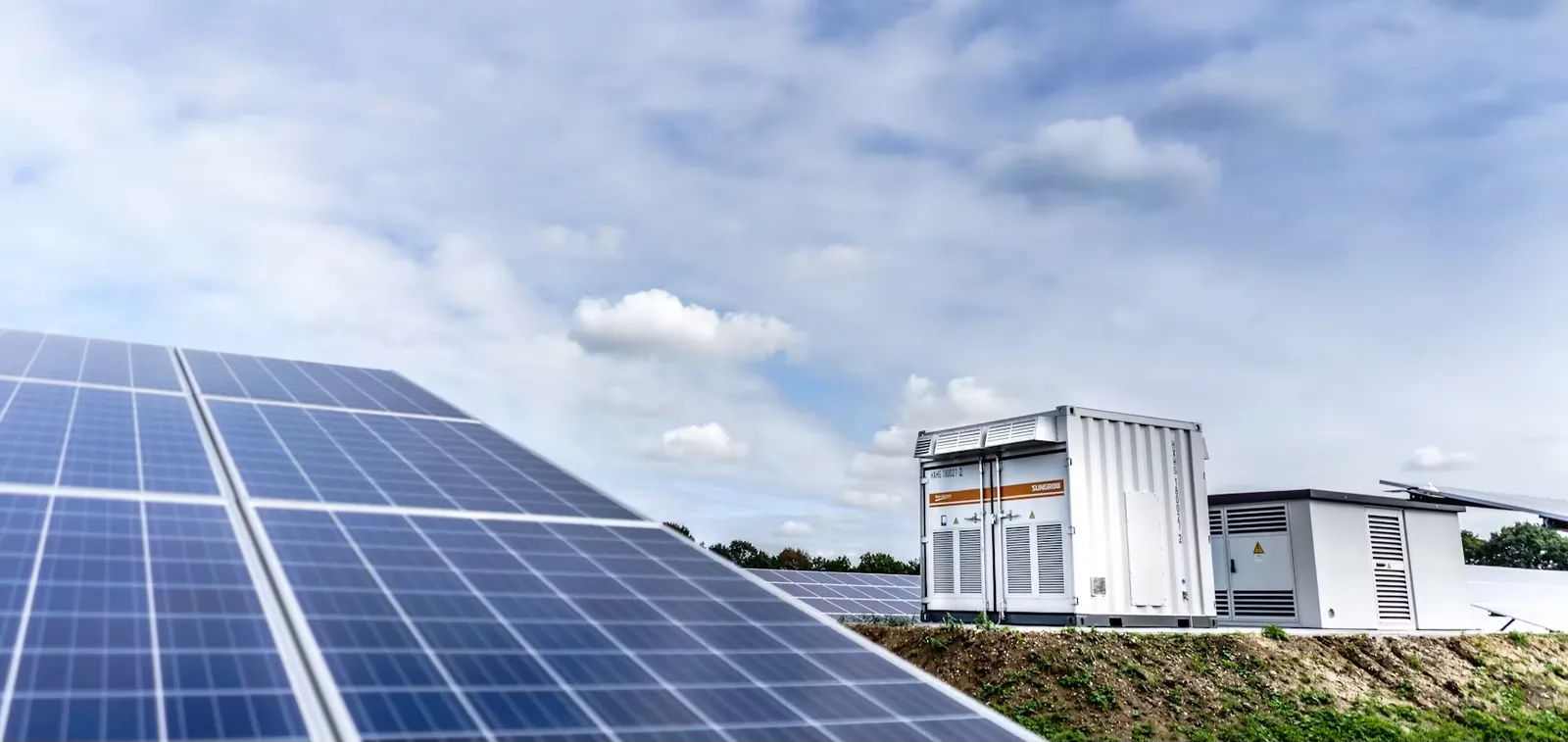
The platform already existed when we came in. It had a working portal, site monitoring and device integrations, but no battery control. It could display data from the sites, but it could not decide when a battery should charge or discharge. The planning, scheduling and real-time control needed to be built from the ground up.
Planning ahead, responding in real time
We built the planning and decision layer that sits underneath the platform. It combines a consumption model that generalises across locations, a physics-based estimate of solar production from the actual weather forecast, and the next day's wholesale electricity prices. All of that feeds into a mixed-integer optimiser that produces a full charge and discharge schedule for every battery in the fleet, looking a full day ahead and regenerating every hour. The schedule accounts for battery capacity, efficiency losses, the energy balance across the site and the tariff structure the customer is actually on, down to contracted-power tariff blocks. Business rules are constraints in the model rather than tuning in a heuristic, so adding one does not mean retuning the scheduler, and the optimisation strategy can be swapped per deployment.
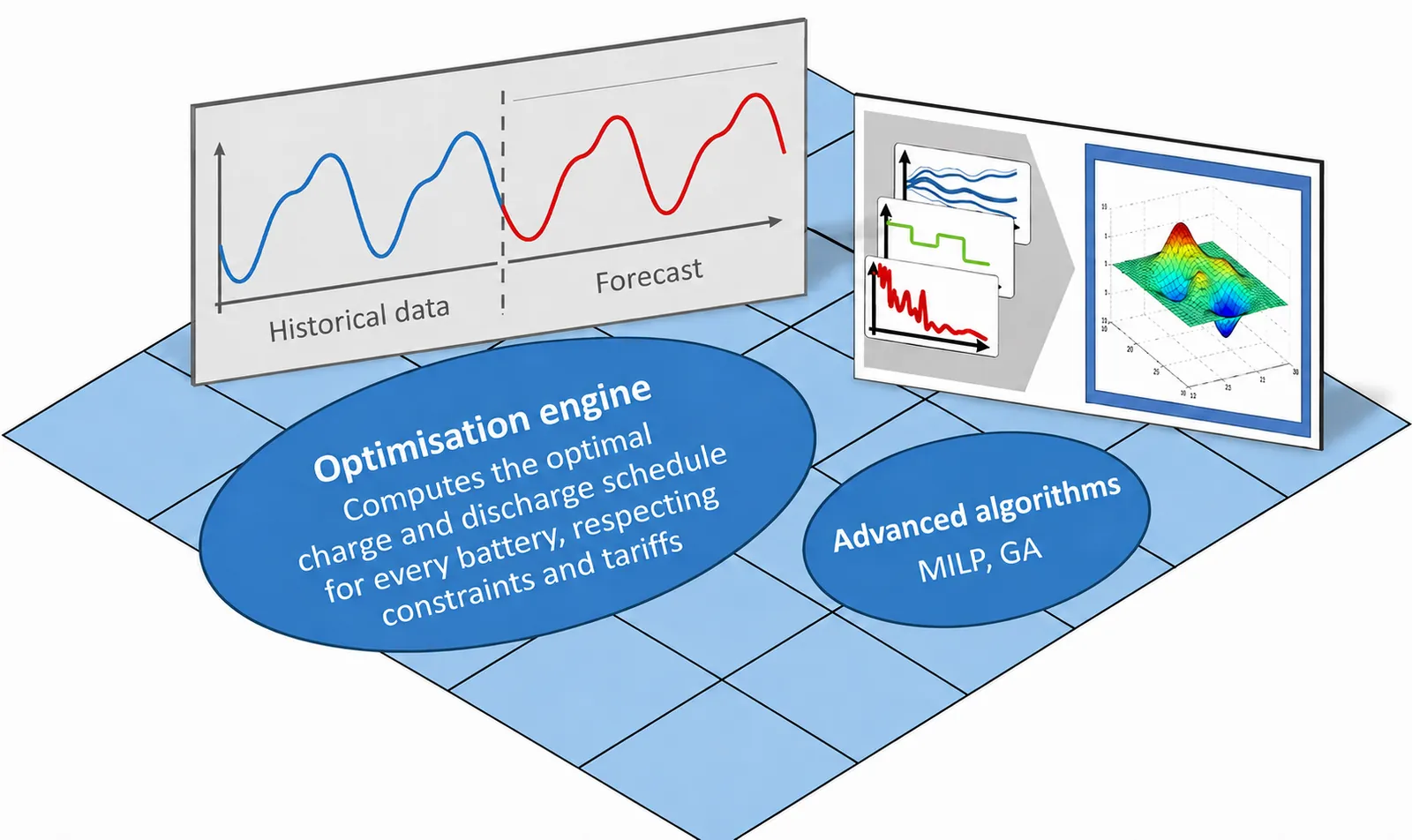
A day-ahead schedule on its own is not enough because conditions on site change faster than that. A grid connection approaches its limit, prices go negative, or a car plugs in and suddenly needs headroom. So alongside the planner we built a real-time control layer that follows the schedule under normal conditions but overrides it when the situation demands. It protects grid connections from overload, with hysteresis so it does not flap around the limit, charges batteries when prices go negative, throttles solar when it has to, sheds heat pump load within set bounds and keeps enough room free for EV sessions that are about to begin.
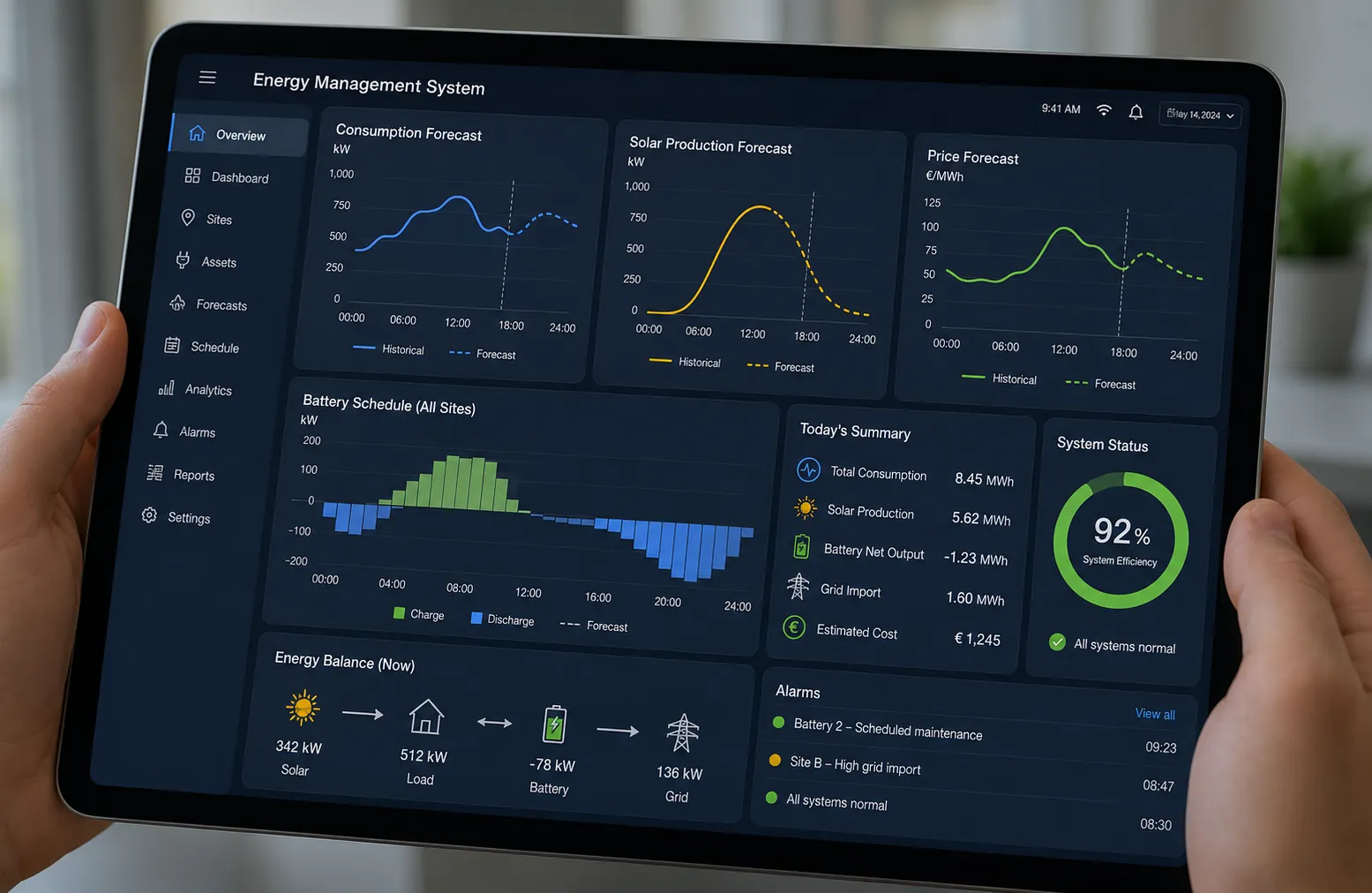
We also built the settlement and savings side of the platform. Every interval gets a cost calculation in billing-grade decimal arithmetic, and alongside it a comparison showing what that interval would have cost without our optimisation. That gives operators and their customers a clear, verifiable answer to the question everyone asks: how much is this actually saving me. On top of that we built a simulator that lets prospective customers compare different equipment configurations over a full year of historical data before committing to anything.
What changed
The platform now plans ahead in a way it could not before. Every battery on the fleet has an optimal schedule for the day, built from real forecasts and real prices, and that schedule regenerates itself every hour as conditions evolve. When something unexpected happens on site, the control layer steps in without waiting for the next planning cycle. And for the operator, the question of whether the system is actually saving money has a clear, auditable answer rather than an estimate.